If you've ever tried to sell used books online, you know the feeling. You scan a book you paid $45 for, and BooksRun offers you 80 cents. Eighty cents. But it's fast. And that's the whole trap.
I've spent years testing every platform, comparing prices, refining my approach. And I've landed on something pretty straightforward: there is no single best site. There are two completely different strategies, and the right one depends on your patience, your time, and above all the actual value of the book you're holding.
To put real numbers behind this, I took a book from my own shelf, Africa Rising: Fashion, Design and Lifestyle from Africa by Gestalten (ISBN: 9783899556414), and ran it through both approaches. No hypotheticals. Screenshots.
Strategy 1: Sell Used Books via Instant Buyback
How it works
You scan your book's ISBN, the platform gives you a price, you ship it, you get paid. No negotiation, no listing, no waiting for a buyer. But the platform sets the price, not you.
On April 6, 2026, I checked this book's buyback price on every major US platform. Here's what I found:
| Platform | Buyback price | Note |
|---|---|---|
| TopDollar4Books | $5.00 | Best offer by far |
| BooksRun | $0.80 | — |
| World of Books | $0.77 | — |
| Powell's | Not buying | — |
| eCampus | Not buying | — |
| TextbookRush | Not buying | — |
| SellBackBooks | Not buying | — |
| Valore | Not buying | — |
| + 13 other platforms: Not buying | ||
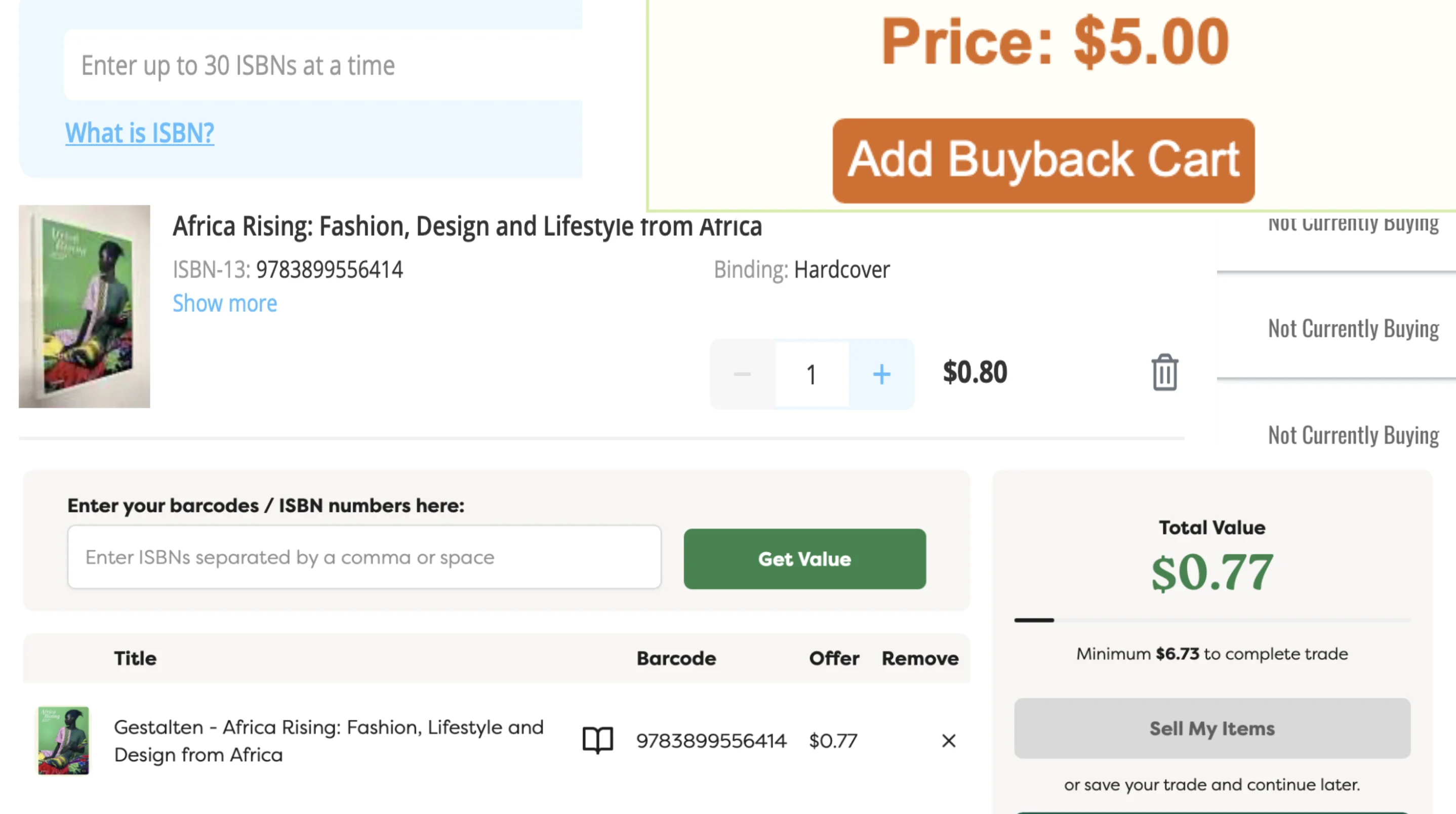
Out of 21 platforms, only 3 were willing to buy this book at all. And the best offer was $5. Most of them, including big names like Powell's, eCampus, and TextbookRush, wouldn't even take it.
Even if you use a comparison tool like BookScouter (which aggregates buyback offers from dozens of vendors), the result is the same: a handful of lowball offers and a wall of "Not Currently Buying."
That $5 from TopDollar4Books? It sounds okay until you realize what this book is actually worth.
Strategy 2: How to Sell Used Books for Their Real Value
Before I list a book anywhere, I always check its real market value on BiblioScan. I built this tool because I was tired of shipping books off for $3 that were selling for $60+ between real buyers.
BiblioScan analyzes past sales, the number of listings online, the actual median selling price, and gives you an estimated net profit. Here's what it showed for our Africa Rising book:
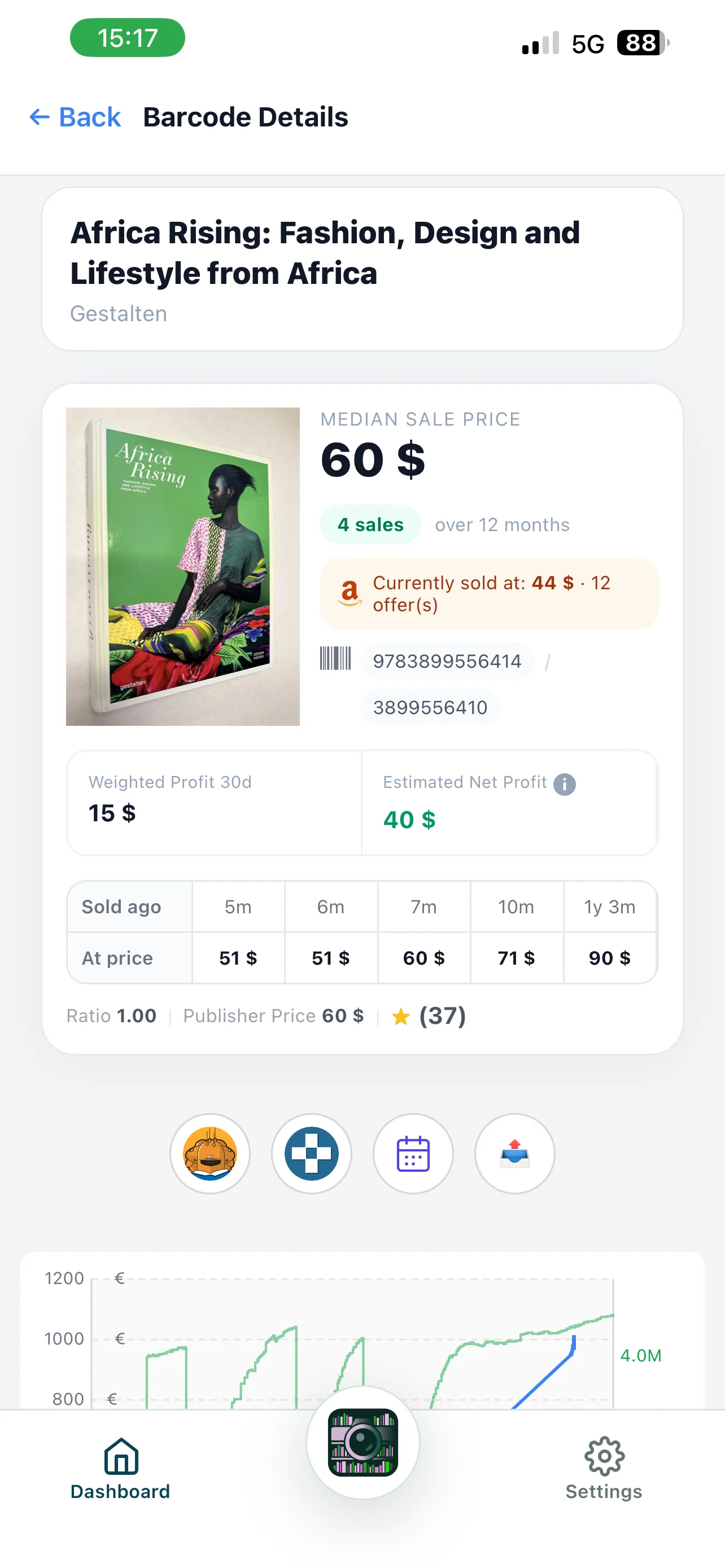
The gap is brutal. The best buyback offer is $5. The actual median selling price on the open market is multiple times that. TopDollar4Books is offering you a fraction of what real buyers pay for this book.
BiblioScan also shows me the sales history, how often the book sold over the past 12 months and at what prices. This is a niche photography/design book. It doesn't move every week. But when it does, people pay real money for it. That kind of data changes the entire decision. Without it, you'd ship the book to BooksRun for 80 cents and never think twice.
Best Places to Sell Used Books Online in the US
Once BiblioScan confirmed this book was worth selling myself, I had to pick where. The US has a ton of options, and each one fits a different situation:
- Vinted, No seller fees. Vinted blew up in the US in 2024–2025, and books sell surprisingly well there, especially anything with a visual or lifestyle angle. For books in the $10–$40 range, this is often my first pick.
- eBay, Still the king for anything rare, out-of-print, or collectible. Auction format can push prices up on books with demand. International reach is a huge plus for foreign-language or imported titles.
- Facebook Marketplace, Great for local pickup. No shipping cost, no fees if you meet in person. Works well for heavy coffee table books and bulk lots.
- Mercari, Popular in the US, especially for media. 10% seller fee but a big audience. Clean interface, easy listing by barcode scan.
- Poshmark, Not just for clothes anymore. Poshmark has a growing books category. Flat $7.11 shipping on orders over $15 (seller doesn't pay it). Good for design, fashion, and art books specifically.
- AbeBooks Owned by Amazon, focused on rare, antiquarian, and collectible books. If you're holding a first edition or a signed copy, this is where the right buyers are.
- ThriftBooks (seller program) ThriftBooks also buys books directly, but their real value is as a marketplace for higher-volume sellers. If you're clearing out hundreds of books, they have bulk selling options.
- Craigslist Old school, still works. Cash deals, local only, zero fees. Especially useful for clearing out a whole shelf at once.
Where to Sell Books Near Me: The Local Options
"Sell books near me" is a different question from "best site": you want cash today, no boxes to ship, and you are willing to take less for it. Four local routes, in the order I would try them:
- Half Price Books and the regional chains. Bring the box to the counter, wait twenty minutes, take the offer in cash or (usually higher) store credit. The offers sit below online buyback because the store carries the resale risk on the spot, and they are per box, not per book, so pull out anything valuable before you go.
- Independent used bookstores. Most buy, but selectively: call ahead, ask what they are looking for (many want current fiction, local history, art and photography, and refuse textbooks and book-club editions), and expect credit to beat cash by a wide margin. Our city-by-city directory of used bookstores lists the shops per US city; the ones that buy are the same ones worth browsing.
- Facebook Marketplace and Craigslist for whole lots. A shelf of paperbacks priced as one lot for local pickup moves faster than any single listing, and costs nothing in fees or shipping.
- Library friends sales. Not a sale for you (they take donations), but the fastest way to clear what nobody will buy, with a tax receipt.
The rule that applies locally as much as online: check the valuable ones first. A single out-of-print title in the box can be worth more than the whole in-store offer, and the store will not tell you. For a comparison of what the online buyback vendors pay, side by side on the same ten books, see the best book buyback sites.
What about Amazon?
If you have volume (50+ books), an Amazon seller account starts making sense. The Individual plan charges $0.99 per sale plus a 15% referral fee. The Professional plan is $39.99/month but drops the per-item fee. For niche and academic books, Amazon buyers will pay full price because they're searching by ISBN. FBA handles all shipping and storage but adds its own costs, overkill unless you're running a real operation.
The BookScouter shortcut
If you go the buyback route, BookScouter is worth knowing about. You scan an ISBN and it shows you buyback offers from 30+ vendors side by side. It won't change the fact that most offers are terrible, but at least you'll find the least terrible one in 10 seconds. If BookScouter is not enough, our guide to BookScouter alternatives covers the other comparators and the vendors worth selling to directly.
For our Africa Rising book, I chose to sell it myself. I knew from BiblioScan that this book had real value and that buyers existed. I listed it, set my price, and waited.
The Result
Extra money by selling myself: +$26.
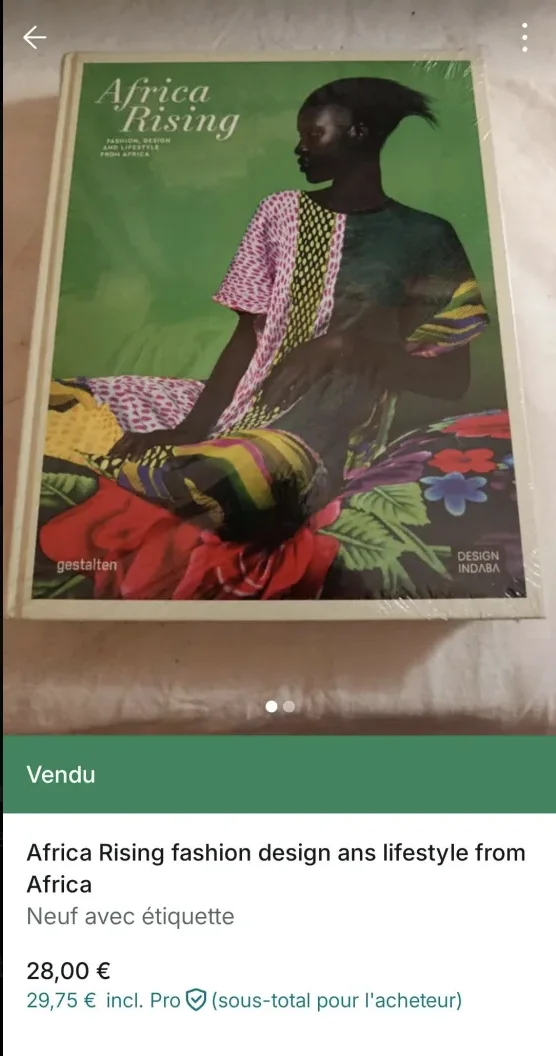
$31 instead of $5. Over 6x more. And that $5 was the best buyback offer, BooksRun would have given me 80 cents.
Did it take more work? Sure. I took a photo, wrote a short description, packaged and shipped the book. Maybe 12 minutes total plus a bit of waiting. For $26 extra, I'll take that trade every time.
Could I have gotten even more? Probably. On eBay or Amazon, this book has sold for $40 to $60 in the past. I chose Vinted for speed and simplicity, but the point stands: selling yourself always beats buyback on books with real value.
Best Way to Sell Used Books: Both Strategies Compared
There's no wrong strategy. There's the right strategy for the right book.
Instant Buyback
Who it's for: You have three boxes of mass-market paperbacks in your garage. You're moving next month. You want cash fast without the hassle.
Platforms: BookScouter (to compare offers), TopDollar4Books, BooksRun, Decluttr, SellBackYourBook, TextbookRush. For textbooks specifically: eCampus, Valore (via Chegg), CampusBear.
The trap: Not checking the real value first. You could ship off a $60 book for $2 and never know.
Selling Yourself
Who it's for: You've got some patience, you like getting the full value of things, or BiblioScan flagged a book in your collection that's worth way more than the buyback offer.
Platforms: Vinted (no seller fees), eBay (rare/collectible, global reach), Facebook Marketplace (local, free), Mercari (easy listing), Poshmark (visual/lifestyle books), Amazon (volume and niche), AbeBooks (antiquarian). Craigslist if you want cash in hand same day.
The upside: You set the price. You capture the real value. And on niche books (art, design, academic, out-of-print), the difference between buyback and self-sale is often 5x to 20x.
My Advice
Before you sell used books anywhere, scan them first. Not just to get a buyback quote, every app does that. Scan them to find out what they're actually worth. The price real people actually pay. You can check what a single book is worth for free with our book value estimator — just type in the ISBN, no sign-up.
That's why I built BiblioScan. The tool shows you the median selling price, sales history, number of sales over the last 12 months, the max recommended purchase price, and an automatic ranking (the BiblioRank) that sorts your books from most profitable to least profitable. If you want to check one book, scan the barcode. If you have a whole shelf, take a photo: the AI identifies every book, and in a few seconds you know which ones are worth selling yourself and which ones can go to buyback without regret.

The Africa Rising book is just one example. Every week I find books that people would have shipped to BooksRun for a dollar, and they're worth $30, $50, sometimes $100+. The difference between someone who gets $20 from a box of books and someone who gets $200 from the same box is usually just information.
Bottom Line
Always compare buyback prices across platforms, the gaps are wild. Check what your used books are actually worth before you let them go for pennies. The best way to sell used books starts with knowing their real value. And when a book has real value, sell it yourself. The extra you pocket is well worth the time.
FAQ
What are the best places to sell used books online in 2026?
For selling yourself: eBay for anything rare or collectible, Amazon for textbooks and niche titles searched by ISBN, Vinted and Mercari for $10–$40 books with a visual angle, Facebook Marketplace for local lots. For cash today: run every ISBN through BookScouter and ship to the top vendor, which in our September 2026 test was BooksRun on 8 books out of 10 (see the best book buyback sites). The ranking has not changed much year to year; what changes is which of your books are worth listing, and that is a per-book check.
What are the top ways to compare used book prices, conditions and seller ratings side by side?
Three tools, for three questions. BookScouter compares buyback offers from 30+ vendors per ISBN, with each vendor's rating next to its price. BookFinder and AbeBooks compare listings of the same edition across sellers, with condition and seller ratings, which tells you what buyers are being asked to pay. BiblioScan shows what the edition actually sold for over the last 12 months, how often, and how many competing offers there are, next to the buyback offers, which is the comparison that decides whether to list or cash out. Always compare by ISBN, never by title: a hardcover and its paperback are different products.
Which book buyback site pays the most?
No single one. On the same ten books BooksRun won eight, World of Books two, and the spread between vendors on one book reached 40x. Check each ISBN through a comparator; the best offers combined came to $544 for books whose median sale prices added up to $4,633.